Applying is straightforward and mostly online. The one step you cannot avoid is collecting the card in person, and choosing where to do that is the decision worth thinking about.
You apply online, pay €150, wait for a background check by the Police and Border Guard Board, and collect the card at one of 50+ locations worldwide.
The fee is not refunded if the application is declined. The card is valid 5 years and renewal costs the same — until 1 January 2027, when both become a flat €165.
Table of Contents
The Process
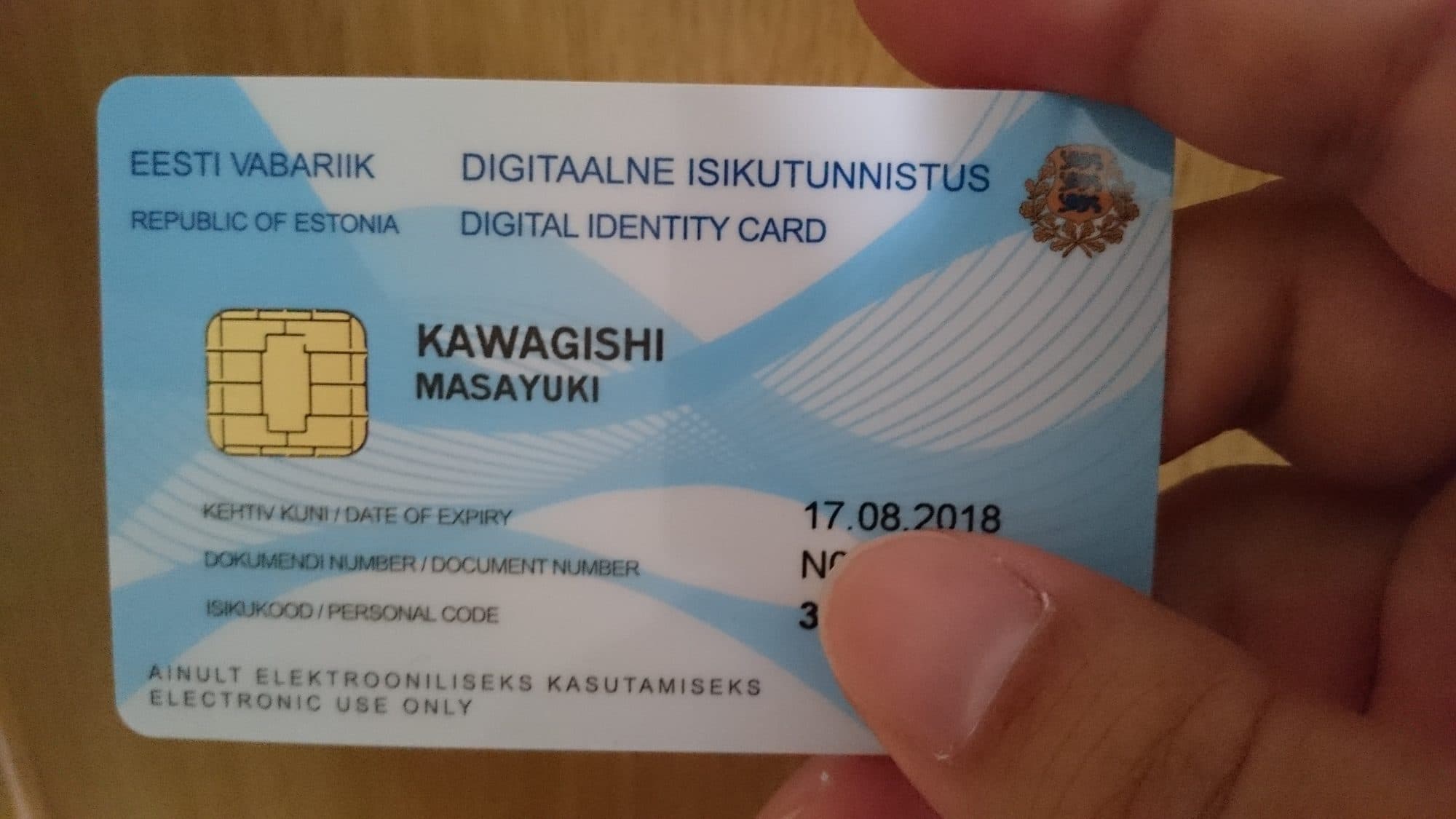
This is what arrives at the end: a digital identity card, electronic use only. It is not a residence permit, not an ID document, and it will not get you through a border.
Apply online
Identity documents, a photograph, and a statement of why you want e-Residency. The fee is payable here and is not refundable.Background check
Run by the Police and Border Guard Board. This is a real check, not a formality — see below on refusals.Collect in person
You choose the pickup point when you apply. Biometrics are taken and the card handed over. This is the only step that cannot be done remotely.
What You Pay, and When
| Item | Cost | Note |
|---|---|---|
| Application | €150 | Paid at application. Not refunded if declined. |
| Renewal | €150 | Same fee, every 5 years |
| From 1 January 2027 | €165 | Flat, for application and renewal alike |
| New PIN codes | €20 | |
| Changing pickup location | €10 | After you have applied |
Ignore the €100 and €120 figures still circulating. Third-party pages quote a range of older amounts, some of them location-tiered. The Police and Border Guard Board states a single fee of €150 with no location split, and it is the authority on its own fee.
Choosing a Pickup Location
There are 50+ collection points. Inside Estonia: Tallinn, Tartu, Narva and Pärnu. Outside, they are mostly Estonian embassies and consulates, spread across Europe, the Americas, Asia and Oceania.
Choose carefully, because changing it afterwards costs €10 and the list moves — points open and close. Check the current list at application time rather than trusting any guide, including this one.
What You Have to Upload
Five things, and two of them carry a validity window that catches people out.
The five items
All uploaded during the online application:
- A copy of your identity document — a passport, or an EU identity card
- A recent colour digital passport photograph
- A short statement of motivation: how you intend to use e-Residency
- A CV, or a link to a profile showing your education and work history
- A VISA or MasterCard to pay the fee
The two windows
Both are checked, and both fail silently:
- The identity document must be valid for at least 2 more months
- The photograph must have been taken within the last 6 months
- Neither is judged by you — a passport expiring in six weeks is a rejected application, not a warning
The motivation statement is the part worth spending time on, and the part people rush. It is not a formality attached to an otherwise automatic process. The Board reads it, and an application that cannot articulate a purpose is the most common avoidable refusal — with a fee that is not returned.
The form itself takes 30–60 minutes once the documents are ready. Almost all of the real work is assembling them beforehand.
How Long It Actually Takes
Three different numbers are published, they measure three different things, and quoting only the first is how guides tell people they will have a card in a month.
| Stage | Published time | What it measures |
|---|---|---|
| Filling in the form | 30–60 minutes | Your time, once documents are ready |
| Review | 30 calendar days | The Board's own processing window |
| Manufacture and shipping | 2–5 weeks | After a positive decision, before collection is possible |
| Typical time to collection | 2–4 months | Including your own trip to the pickup point |
| Activation | 24 hours | Automatic, after you have collected it |
Plan against two to four months, not thirty days. The 30-day figure is the one every guide repeats, and it is the least useful of the three because it stops at the decision. The programme's own estimate of when people actually hold the card is 2 to 4 months. If a company registration, a client contract or a bank appointment depends on the card existing, that is the number to build the plan around.
Collecting the Card
The one step that cannot happen remotely, and the one with a trap in it for anyone choosing a pickup point abroad.
Wait for the email
You are invited to collect once the card reaches the location you chose in the application. Turning up before the invitation achieves nothing — the card is not there.Bring the same identity document you applied with
Not a different passport, not a renewed one. The document is matched against the application, and a replacement passport issued in the meantime is a problem to raise before you travel, not at the counter.Give fingerprints
Biometrics are taken at collection. This is why the step is in person and why no courier option exists.Wait up to a day
The card activates automatically within 24 hours of collection. It is not usable the moment it is handed over, which matters if you have booked something for the same afternoon.
Collecting the card somewhere does not give you the right to be there
The programme states this plainly and it is worth repeating, because the logic is inviting and wrong: choosing a pickup point in a country does not give you any right to enter that country. If you need a visa to visit the place where your card is waiting, you still need that visa. People choose a convenient-looking embassy, discover they cannot legally travel to it, and then pay to change the location.
Renewal and Replacement
The card is valid for 5 years. Renewal is a fresh application rather than a rubber stamp: the same fee, the same background check, and the same in-person collection.
| Situation | Cost | What is involved |
|---|---|---|
| Renewal at the end of the term | €150 | A new application, reviewed again |
| Replacing a lost or damaged card | €150 | Same fee as a new application |
| New PIN codes | €20 | Cheaper, and the fix for a blocked card |
| From 1 January 2027 | €165 | A flat fee for application, renewal and replacement alike |
A blocked card is not a lost card. Three wrong PIN entries block the certificate, and the fix is new PIN codes at €20 — not a €150 replacement. People conflate the two and pay seven times more than they need to.
If the company is live, the renewal is not optional in any practical sense: without a working digital ID you cannot sign, cannot file the annual report, and cannot access the banking that depends on it. Start it before the card expires rather than after.
What It Costs After the Card
The €150 is the smallest number in this project, and treating it as the cost of e-Residency is the single most common budgeting error. The programme publishes its own ranges for what follows.
| What | Published range | How often |
|---|---|---|
| e-Residency application | €150 | Once, then every 5 years |
| Registering an OÜ | €265 | Once |
| Contact person | €200–€400 | Every year |
| Accounting | From €50 | Every month |
Those last two rows are the ones that decide whether the company is worth having. What an Estonian company actually costs totals them per provider; the providers themselves are compared separately.
The state's range is a sanity check on a provider's quote. The programme publishes €200–€400 a year for a contact person and accounting from €50 a month. A quote well outside those bands is not necessarily wrong — bundles vary — but it is worth asking what is in it.
Why Applications Get Refused
The background check is genuine. Applications are refused where the applicant cannot be reliably identified, or where there is reason to doubt the stated purpose.
Since the fee is not refunded on refusal, the statement of purpose is worth taking seriously. "I want an EU company to serve EU clients as a freelance developer" is a purpose. "I want EU residency" is not — and is also, as the separate page on this sets out, not something e-Residency provides.
Common Mistakes
Writing “EU residency” as the purpose is the fastest way to a refusal, and the fee does not come back. The programme grants no residency, so a purpose built on it does not hold up under a check that exists to test exactly that.
Picking a pickup point casually is the next. Changing it later costs €10, and the list of points opens and closes, so check the current list at application time rather than a published one.
Budgeting for €100 or €120 is a third. Third-party pages still quote older, sometimes location-tiered amounts; the Police and Border Guard Board charges a single €150 with no location split.
The last is assuming renewal will stay at this price. From 1 January 2027 both application and renewal become a flat €165, so if your card comes up for renewal after that date, budget the higher figure.
Frequently Asked Questions
How much does it cost to apply?
€150 in 2026, rising to a flat €165 from 1 January 2027. It is not refunded if your application is declined.
Do I have to travel to Estonia?
Only if you choose an Estonian pickup point. There are 50+ locations worldwide, mostly Estonian embassies. The card must be collected in person somewhere.
How long is the card valid?
5 years, then renewable at the same fee.
Can my application be refused?
Yes. The Police and Border Guard Board runs a background check and refuses applications where the applicant cannot be identified or the stated purpose does not hold up. The fee is not returned.
How long does it take from applying to holding the card?
Three published numbers measure three different things, and only the last one is the one to plan against. The Board's review window is 30 calendar days. After a positive decision the card is manufactured and shipped, which takes a further 2–5 weeks. The programme's own estimate of when applicants actually have the card in hand, including their own trip to the pickup point, is 2–4 months. The card then activates automatically within 24 hours of collection, so it is not usable the moment it is handed over.
What do I have to upload with the application?
Five things: a copy of your identity document — a passport or an EU identity card — a recent colour digital passport photograph, a short statement of how you intend to use e-Residency, a CV or a link to a profile showing your education and work history, and a VISA or MasterCard to pay with. Two validity windows are checked and both fail silently: the identity document must be valid for at least 2 more months, and the photograph must have been taken within the last 6 months. The form itself takes 30–60 minutes once the documents are ready; the motivation statement is the part worth the time, because an application that cannot articulate a purpose is the commonest avoidable refusal and the fee does not come back.
My card stopped working after I mistyped the PIN. Do I need a new one?
Almost certainly not, and this is where people pay seven times more than they need to. Three wrong PIN entries block the certificate, and a blocked card is not a lost card: the fix is new PIN codes at €20. A €150 replacement is for a card that is genuinely lost or damaged, and it is a full application with the same background check and the same in-person collection as a new one. Check which of the two you actually have before paying anything.
Is renewing the card a formality?
No. The card is valid 5 years and renewal is a fresh application rather than a rubber stamp — the same €150 fee, the same background check by the Police and Border Guard Board, and the same collection in person at a pickup point you choose. From 1 January 2027 application, renewal and replacement all become a flat €165, so budget the higher figure if your card comes up after that date. The timing matters more than the money if a company is running on it: without a working digital ID you cannot sign, cannot file the annual report and cannot reach banking that depends on the card. Start the renewal before the card expires rather than after it has.
The €150 is the whole cost, isn't it?
It is the smallest number in the project, and treating it as the cost of e-Residency is the commonest budgeting error here. The programme publishes its own ranges for what follows: €265 once to register an OÜ, €200–€400 a year for a contact person, and accounting from €50 a month. The last two are the rows that decide whether the company is worth having, because they recur — and they are useful as a sanity check on a provider's quote. A figure well outside those bands is not necessarily wrong, since bundles vary, but it is worth asking what is inside it. Our pages on what an Estonian company costs a year and on the providers themselves total them properly.
What happens on the day I collect the card?
You go only once you have been invited by email — turning up earlier achieves nothing, because the card is not there yet. Bring the same identity document you applied with, not a renewed or different one; if your passport was replaced in the meantime, raise it before you travel rather than at the counter. Fingerprints are taken at collection, which is why the step is in person and why there is no courier option, and the card activates automatically within 24 hours afterwards. One trap is worth stating plainly: choosing a pickup point in a country gives you no right to enter that country. If you need a visa to get to the embassy holding your card, you still need that visa — and changing the location afterwards costs €10.