An international student's banking problem is not which Estonian bank is best. It is that you land in August with a visa in your passport, no Estonian personal identification code, no registered address and no residence permit card — and every system in the country is keyed to things you will not hold until roughly Christmas. One bank publishes a route for exactly that position, and it asks for a visa rather than a permit.
LHV's own student page lists three documents: a copy of your identity document, a copy of your visa, and a certificate of enrolment. You email them, wait 2–3 working days for a decision, then go to a branch in person, because a client with no Estonian residence permit card cannot be identified digitally. An isikukood is not on the list.
The account you get is priced as a non-resident account — €200 to open and €20 a month from outside the EEA — and that is the real cost of the four-month gap. TalTech, which has an agreement with that bank, describes the rest of the market as charging €200–€250 for the background check on a long-stay-visa holder.
Table of Contents
The Gap Between Landing and a Residence Permit Card
Semester starts on a fixed date. The residence permit that unlocks Estonian banking does not, and the distance between the two is this page's subject.
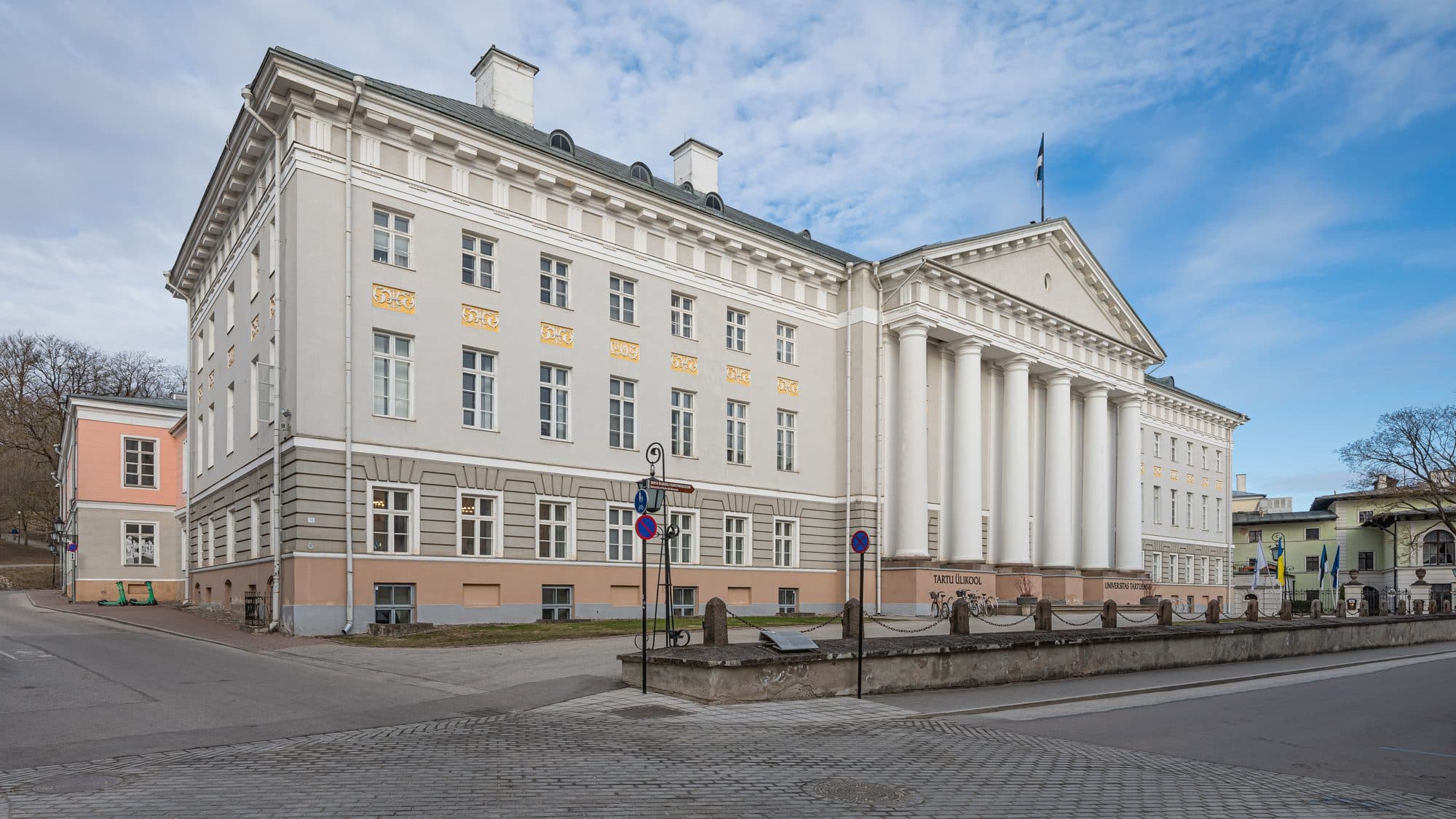
Study in Estonia sets out the order for a non-EU degree student plainly: apply for a long-stay D visa at an Estonian foreign mission before you travel, and then, if your studies run beyond a year, apply for the temporary residence permit for study after you arrive. The permit is not something you hold on landing. The Police and Border Guard Board then publishes what happens next in one sentence: you will receive a response within 90 days, and the residence permit card will be issued within 30 days thereafter.
The D visa is issued abroad
Applied for at an Estonian foreign mission, or at whichever Schengen state represents Estonia where you live. This is what lets you land. It is not a residence permit and it produces no Estonian personal identification code.
You arrive with a visa and nothing else
No isikukood, no registered address, no residence permit card, no Smart-ID. Rent, a deposit and a first month of living costs all fall due inside this window.
The permit is decided
The clock runs from the day the application is accepted, or the last deficiency remedied — not from the day you handed it in.
The card is issued
Only now can most Estonian banking be done digitally, and only now does the non-resident tariff stop being the tariff that applies to you.
You register your place of residence
A non-EU student must register in the population register within a month of the permit being granted; an EU citizen registers within three months of entry.
Four months is the optimistic reading, because the ninety days restart from the last correction rather than resuming. Every consequence lands at a bank: which tariff you are on, whether you can be identified online, and whether a transfer from home arrives whole. The permit timetable itself is on the study residence permit page.
What Actually Opens an Account Without an ID Code
The general advice — bring a lease or an employment contract — is written for someone moving here to work, and a student in week one has neither. What a student has is a certificate of enrolment, and that turns out to be enough at more than one bank.
Five questions decide whether this route is yours; the first three end it when the answer is no.
- Do you have a valid passport, or an ID card issued in a European country? LHV asks for a copy of the identity document — a passport, or a two-sided picture of a European ID card. The Tartu Welcome Centre puts it more loosely for all five banks: a valid passport or another recognised identity document.
- Do you have a copy of your visa? This is the item that makes the route work: LHV's student page names a copy of the visa as one of its three documents — not a residence permit, not a residence permit card.
- Do you have a certificate of enrolment from your institution? Named on LHV's non-resident page as one of the accepted proofs of connection to Estonia, alongside a lease, an employment contract and company documents, and by the Tartu Welcome Centre as a study certificate. Ask your international office for it before you fly.
- Can you get to a branch in the first fortnight? The City of Tallinn's migration centre states the rule without hedging: non-residents must do this in person; online verification is not allowed. Book the appointment before you need it.
- Do you already hold an isikukood or a residence permit card? Then this route is not yours: you are an ordinary customer, digital identification works, and the general bank accounts page is the one to read.
Tick the first three and you can open an Estonian account before your residence permit exists — just not cheaply, and not online.
What is conspicuously not on that list is an Estonian personal identification code. The City of Tartu's page on the isikukood names what the code is for — entering your data in the state databases the Tax and Customs Board, the Health Insurance Fund and the Social Insurance Board work from — and a bank account is not among them. No bank publishes a rule requiring it, so treat the code as what makes banking cheap and digital rather than possible.
Digital identification is the thing you lose, not the account. Estonia runs on ID-card and Smart-ID logins, and a client with no residence permit card cannot use them. LHV's answer is a PIN calculator — a device sold in its offices that gets you into internet banking without an Estonian digital identity. It publishes no price for it, so ask at the counter and put the answer in your first-week costs.
What the Gap Costs, Bank by Bank
Every euro below is from a bank's own price list, except where a university's figure is quoted and labelled as one.
Nothing here is paid placement and no bank pays to appear. Where a provider runs an affiliate programme we may earn a commission if you open an account through our link; where one does not, we link to them anyway or describe them with no link at all. LHV leads this page because it is the only one of the five publishing a documented route for a student holding a visa — a finding from its own website, unchanged by whether it ever pays us anything.
| Bank | To open, EEA | To open, outside the EEA | Monthly, outside the EEA |
|---|---|---|---|
| LHV | €100 | €200 | €20 |
| SEB | Free | €250 document handling | €7 |
| Swedbank | Free | €200 → €250 on 31 August 2026 | By service plan only |
| Coop Pank | Free | €195 | €8 |
| Luminor | Free | €250 document verification | €15 |
One row of that table moved on 31 August 2026. Swedbank's own price-changes page raised the document-processing fee for residents of countries outside the EU and EEA from €200 to €250 — four days either side of a September intake. The same page raised Swedbank’s PIN calculator from €25 to €30, and made a replacement cost €30 where it had been free.
TalTech tells its arrivals the same story from the other side of the counter: the major Estonian commercial banks charge a €200–€250 fee for the additional background check on someone holding a long-stay visa, and LHV is the only bank which has made opening the account for non-EU students more comfortable. Tallinn University says flatly that a student without a temporary residence permit cannot open an Estonian bank account for free.
Who each bank suits. LHV is the one to email if you are a non-EU student arriving on a study D visa, and the only one of the five publishing a route for a visa holder; it charges €100 to open and €10 a month from inside the EEA. SEB is the cheapest month for an EEA student, at €0.30, and the most expensive door for anyone else. Swedbank suits an EEA student who wants a card that doubles as a student ID; its Essential plan costs €1 a month and is free below 25. Coop Pank, which opens on a passport, residence permit or ID card, suits a non-EEA arrival minimising the fee to walk in the door, though it publishes no student product and its entry plan is €1.49 a month, free below 26.

LHV Pank
The only documented route for a visa holder
Key features
- Publishes the three documents a student needs
- Decision by email before any branch visit
- Card fee waived below 26
- Free European and instant payments
Account details
- Opens on
- Passport, visa, enrolment certificate
- Decision
- 2–3 working days
- Opening, non-EEA
- €200
- Monthly, non-EEA
- €20
Summary
- Publishes the three documents a student needs
- Decision by email before any branch visit
- Card fee waived below 26
- Free European and instant payments
- Priced on the non-resident tariff
- Identification is face to face only
- PIN calculator needed; price not published

SEB
Cheapest month for an EEA student
Key features
- €0.30 a month for an EEA student
- No monthly fee below 19 or above 65
- Credit card fee waived to age 25
- Publishes an ISIC Student card
Account details
- Monthly, EEA
- €0.30
- Monthly, non-EEA
- €7
- ISIC Student card
- €7.50 + €1/mo
Summary
- €0.30 a month for an EEA student
- No monthly fee below 19 or above 65
- Credit card fee waived to age 25
- Publishes an ISIC Student card
- €250 document handling from outside the EEA
- €7 a month from outside the EEA
- No student route for a visa holder
Swedbank
Free for EEA students, cheapest student card
Key features
- Free to open for EEA, UK and Swiss
- Essential plan free below 25
- Cheapest student card of the five
- Debit Card Plus €0.32 for ages 20–25
Account details
- Opening, EEA
- Free
- Opening, non-EEA
- €250
- ISIC Mastercard
- €6.33 + €0.32/mo
Summary
- Free to open for EEA, UK and Swiss
- Essential plan free below 25
- Cheapest student card of the five
- Debit Card Plus €0.32 for ages 20–25
- Non-EEA opening rose to €250
- Non-resident monthly priced by service plan
- No student route for a visa holder

Coop Pank
Cheapest non-EEA door of the four
Key features
- Free to open for EU, EEA, Swiss residents
- €195 from outside the EEA — the cheapest
- Free SEPA payments online
Account details
- Opening, EEA
- Free
- Opening, non-EEA
- €195
- Monthly, non-EEA
- €8
Summary
- Free to open for EU, EEA, Swiss residents
- €195 from outside the EEA — the cheapest
- Free SEPA payments online
- No student product, no student route
- Priced by service plan, not headline
- Smallest branch network, and identification is in person
Student Cards and the Age Waivers
Two different things get called a student bank account here, and only one saves a foreign student money.
| A real student product | An age waiver on a normal account | |
|---|---|---|
| What it is | A card sold as a student card, priced as one | A standard account with a fee dropped below a birthday |
| Who publishes one | Swedbank and SEB | LHV, Swedbank, SEB |
| What it costs | €6.33 + €0.32/mo at Swedbank; €7.50 + €1/mo at SEB | Nothing — it is a discount, not a product |
| Does it help a non-EEA arrival? | Not with the opening fee, which is the big number | Not with the opening fee either |
| Does it help at all? | Yes — it is your student ID and transport card too | Yes, on the monthly and card fees |
SEB publishes a student card. Coop Pank publishes none. SEB’s price list, as it stood on 27 August 2026, carries an ISIC Student (Tudeng) card at €7.50 to issue and €1 a month, alongside ISIC Scholar cards for school pupils. The two banks are often lumped together as having no student offer; only Coop Pank does not.
The waivers worth having are all published and all age-based.
| Bank | What is waived | Who qualifies |
|---|---|---|
| LHV | Card monthly fee | Below 26 |
| Swedbank | The Essential plan | Below 25 |
| Swedbank | Debit Card Plus | Free below 19, then €0.32 to 25 |
| SEB | Monthly account fee | Below 19 |
| SEB | Credit card monthly fee | 18 to 25 |
What no waiver touches is where the charges actually hurt: the opening or document-handling fee, which is where €250 or €200 lives; the non-resident monthly tariff, a separate line from the card fee; the PIN calculator you need without a residence permit card; and what an incoming international transfer costs you, covered next. A twenty-two-year-old from outside the EEA gets the card free and still pays €200 to walk in the door.
Getting Money From Home Without Losing It
The single most expensive banking mistake an international student makes is not choosing the wrong bank. It is sending money from home the way their parents' bank suggests, and finding that the amount that arrives is not the amount that left. The University of Tartu states the principle before you have even enrolled. Its application fee is €100, payable by card, by bank transfer to the university's SEB account, or through Wise for applicants from certain countries — and then: it is the responsibility of the applicant to cover the possible transaction charge(s) and make sure the total fee amount (100 euros) is received by the university.
That sentence is about intermediary banks, and it applies to your rent too. On a cross-border wire outside SEPA, banks in the chain each deduct a charge in transit, and the shortfall is the sender's problem — an underpaid fee stops the application.
| Bank | Incoming international (SWIFT) transfer | Domestic and SEPA payment |
|---|---|---|
| LHV | €7 | Free |
| Swedbank | €6 | €0.38, free under 25 |
| SEB | €5.75 | €0.25 |
| Coop Pank | €5.75 | Free |
| Luminor | — | Free |
Which of the two routes the money takes is decided before it leaves, by the currency it starts in. Only one of them applies to any given transfer.
- If the money starts in euros inside the EEA, insist on SEPA. A euro payment between EEA accounts is free or near-free at every Estonian bank in the table above, with no intermediary banks and no deduction in transit. Give the sender your IBAN and nothing else.
- If it starts in another currency, the visible fee is the small half. An Estonian bank charges €5.75 to €7 to receive a wire, and none of the five publishes the exchange margin on conversion. On a large sum that spread is the bigger cost, so ask the sender what will arrive, not what the fee is.
Send one large transfer rather than six small ones, because every incoming wire carries its own flat fee — but a term at a time, not a year, against the risk of being locked out of an account whose deposit guarantee may not be Estonian. And always quote the reference the institution asks for: the University of Tartu requires a specific reference code alongside your name and programme, and a payment that arrives without one is handled manually, which takes weeks.
Every Estonian bank publishes a card FX margin — 1% at LHV, 1.5% at SEB, 1% at Coop — and none of the five publishes the margin applied when an incoming transfer is converted. Compare what actually landed against the mid-market rate on the day, and move the next transfer if the gap is large.
What Wise and Revolut Can and Cannot Replace
Tallinn University tells its international students, in writing, to consider N26, Revolut and Wise, because they give a European IBAN which allows you to receive and send bank transfers in Estonia (e.g. to receive scholarship payments; pay rent or tuition fees) — while adding that it endorses none of them. That is a fair summary of what they do, and not of what they are.
| An Estonian bank account | Wise or Revolut | |
|---|---|---|
| Opens before your residence permit | Yes, at LHV, in a branch | Yes, on your phone |
| Costs to open | Up to €250 | Nothing |
| Gives you a euro IBAN | Estonian | Another EEA country's |
| Receives SEPA payments | Yes | Yes |
| Estonian credit-institution licence | Yes, all five | Neither appears on the supervisor's list |
| Deposit guarantee | Estonian scheme | Not the Estonian one |
| Cash over a counter, in person, when something breaks | Yes | No |
The supervisory point is checkable in one place. Finantsinspektsioon publishes the list of institutions holding an Estonian credit-institution licence — Swedbank, SEB, LHV, Coop Pank, Luminor, plus Inbank, Bigbank and Holm Bank — and neither Wise nor Revolut is on it. Both are licensed somewhere else in the EEA and passport their services in, so the deposit guarantee standing behind your money is not Estonia's.
Wise says this about itself, and it is the sentence to read twice
Wise's own EEA terms of use state that funds held with Wise are not covered by any deposit protection scheme. Money there is safeguarded rather than guaranteed — a different legal mechanism with a different failure mode. Revolut's banking entity is a bank, but it is not an Estonian one, so its guarantee is its home state's rather than the Estonian scheme's. Both are covered in detail on bank accounts and sending money abroad.
Use them for the jobs they are right for:
- Receiving your first month's money before a bank here has said yes
- Paying an application or tuition fee — Tartu accepts Wise from certain countries by name
- Holding a working balance while the residence permit is decided
- Converting from a non-euro home currency, where the margin is quoted
Do not use them where the substitution breaks:
- As the place your whole year's tuition sits for six months
- As your only account, with no in-person fallback if it is frozen
- As a substitute for the Estonian banking relationship you will need for a lease, a salary and a tax refund
- As evidence of 4× the subsistence level without checking what the Board will accept
- As the account an employer’s payroll, a landlord or a utility must accept — nobody publishes whether a foreign IBAN is taken here
Where These Figures Come From
Why You Can Trust This Guide
Opening fees, monthly tariffs, card prices and transfer charges are read from each bank’s own published price list, and the date they were read is at the foot of this page. Where a university describes bank pricing, the page says so and treats it as a university’s account of somebody else’s product.
Whether an isikukood is strictly required, what LHV’s PIN calculator costs, what FX margin applies to an incoming transfer, and whether a foreign IBAN is universally accepted here — four things nobody publishes, printed as four gaps instead of four guesses.
This page contradicts our own student life page about whether SEB publishes a student product. SEB does, and the correction is printed here rather than made silently elsewhere.
LHV leads because it is the only one of the five that publishes a documented route for a student holding a visa. That is a fact about its website, and it would be true if it never paid us anything — which, at the time of writing, it does not.
Frequently Asked Questions
Can I open an Estonian bank account without an isikukood?
At least one bank publishes a route that does not ask for one. LHV's student page lists three documents — a copy of your identity document, a copy of your visa, and a certificate of enrolment from your institution — and an Estonian personal identification code is not among them. You email those to the bank, wait 2 to 3 working days for a decision, and then attend a branch in person for face-to-face identification. No bank publishes a rule stating that the code is required, and the City of Tartu's page on what the code is needed for does not name a bank account. You do not apply for the code separately either: the Police and Border Guard Board issues it during the residence permit proceedings, and a foreigner staying here temporarily who needs one without a permit applies to the local government of a county centre instead.
Is a student visa enough, or do I need the residence permit first?
A visa is enough at LHV, which names a copy of the visa as one of its three student documents. Study in Estonia puts the visa first: the long-stay D visa at an Estonian foreign mission before you travel, the temporary residence permit for study after you arrive if your studies run beyond a year. The Police and Border Guard Board then takes up to 90 days to decide and a further 30 days to issue the card, so the permit is not something you can hold in your first week.
What will it cost me to open an account before my permit arrives?
It depends entirely on whether you are from inside the EEA. From inside, SEB, Swedbank and Coop Pank all open free and SEB charges €0.30 a month, the same as an Estonian resident pays; LHV charges €100 to open and €10 a month. From outside the EEA every bank charges: €195 at Coop Pank, €200 at LHV, €250 at Swedbank from 31 August 2026, and €250 at SEB. TalTech puts the market rate for the extra background check on a long-stay-visa holder at €200 to €250.
Which Estonian bank is easiest for an international student?
LHV, on the evidence of what the banks themselves publish. It is the only one of the five with a student page setting out which documents it wants, where to send them and how long a decision takes. TalTech names it as the only bank which has made opening the account for non-EU students more comfortable, and says the university has an agreement with it. That is not a claim that it is cheapest — from outside the EEA it charges €200 to open and €20 a month, more than Coop Pank's €195 — only that it is the one that has written the process down.
Can I open the account online from my home country before I arrive?
No. You can start it from abroad — the documents go by email and the decision comes back by email — but the identification itself must happen in person. The City of Tallinn's migration centre states the rule without qualification: non-residents must do this in person, and online verification is not allowed, because a client who does not hold an Estonian residence permit card cannot be identified digitally. Send the documents from home, and book the branch visit for your first fortnight here.
Can Wise or Revolut just replace an Estonian bank account?
For the gap, largely yes; as a permanent substitute, no. Tallinn University itself points students at N26, Revolut and Wise for the European IBAN, while adding that it endorses none of them. What they are not is Estonian banks: Finantsinspektsioon's list of Estonian-licensed credit institutions names Swedbank, SEB, LHV, Coop Pank, Luminor, Inbank, Bigbank and Holm Bank, and neither Wise nor Revolut appears on it. Wise's own EEA terms state that funds held with Wise are not covered by any deposit protection scheme. Use them for the first months and for currency conversion; do not park a year's tuition there.
How should my family send me money without losing a chunk of it?
If the money starts in euros inside the EEA, insist on a SEPA payment: give the sender your IBAN, nothing else, and the transfer is free or near-free at every Estonian bank with no intermediary deductions. If it starts in another currency, the flat receiving fee is published — €5.75 at SEB and Coop Pank, €6 at Swedbank, €7 at LHV — but the exchange margin applied on conversion is not, and on a large sum it is usually the bigger cost. Send fewer, larger transfers, and always quote whatever reference the recipient asks for.
Why does my university warn me about transfer charges on the application fee?
Because on a cross-border wire the banks in the chain can each take a cut of the amount in transit, and the recipient gets what is left. The University of Tartu's €100 application fee comes with the warning that it is the applicant's responsibility to cover the transaction charges and make sure the total amount is received, and that an application is not processed until the shortfall is transferred. It also names Wise as an accepted route for applicants from certain countries, which is a university telling you that the ordinary bank wire is the problem.
Is there a real student bank account in Estonia, and is it worth it?
Two banks publish one. Swedbank's ISIC Mastercard costs €6.33 to issue and €0.32 a month, and works as bank card, student ID and transport card at once; SEB's price list carries an ISIC Student card at €7.50 to issue and €1 a month. Everything else marketed as a student account here is an age-based waiver on an ordinary account: LHV waives the card fee below 26, Swedbank's Essential plan is free below 25, SEB charges no monthly account fee below 19. None of it touches the opening fee, which is where the serious money is.
What changes once my residence permit card finally arrives?
Three things, and none of them happens by itself. Digital identification starts working, so the PIN calculator becomes redundant and you can bank online like anyone else. Your address registration becomes due — a non-EU student has 1 month from the grant of the permit to register a place of residence in the population register, an EU citizen three months from entry, and 14 days to notify any later change of address; the Ministry of the Interior takes the notice in person, by post with a copy of your identity document's data page, by digitally signed email, or through the e-population register with an ID card, Mobile-ID or Smart-ID. And you can ask the bank to take you off the non-resident tariff — say that your residence permit card has been issued and ask which tariff you are now on — which at SEB is the difference between €7 a month and €0.30. Nobody at the bank will start that conversation for you.
Do I need an Estonian account to prove I can support myself?
The residence permit for study requires you to show 4 times the subsistence level, and how that proof is made is a question for the Board rather than for a bank. Whether a balance held with a non-bank payment provider such as Wise counts the same way as a bank statement is not something the Board states either way, so put it to a migration consultant — the service is free — before you rely on it.
Should I keep the account I opened as a student after I graduate?
Usually yes, but review the tariff. The bank that would take you as a visa-holding non-resident in September is not necessarily the one you want once every bank in the country will treat you as an ordinary customer, and switching current accounts here is cheap. What is expensive is inertia: staying on a non-resident monthly fee for two years after you stopped being one is a cost no bank is obliged to point out to you.
Do the first-week banking in the right order
Email the documents from home, book the branch visit for your first fortnight, and keep a Wise or Revolut balance alive until the residence permit card arrives. The expensive mistakes here are mistakes of sequence, not of choice.