The isikukood is the eleven-digit personal identification code the Estonian state uses to know who you are. Almost nothing else works without it, and it is the first thing to sort out on arrival.
Your isikukood is eleven digits that identify you across every Estonian system — tax, health insurance, banking, the Population Register, and the digital services Estonia is known for. It is assigned when your residence is registered or your permit is granted.
Without one you cannot register an address, be entered in the employment register, get health insurance, or open an account at most Estonian banks. It is not a document; it is a number, and it is permanent.
Table of Contents
- What it is, and what it encodes
- The code, the card and the digital identity
- The documents that carry it, and what each costs
- How you get one
- Getting one without a residence permit
- Registering your address
- Your first ninety days, in order
- The employer's side of it
- What does not work without one
- What the code is worth at a bank, in euros
- The Estonian history you do not have yet
- What the register entry is quietly accruing
- e-residents get a different number
- Common mistakes
- Frequently asked questions
What It Is, and What It Encodes
The card carries the code, but the code is not the card. One is a number in the population register that follows you for life; the other is a piece of plastic that expires.
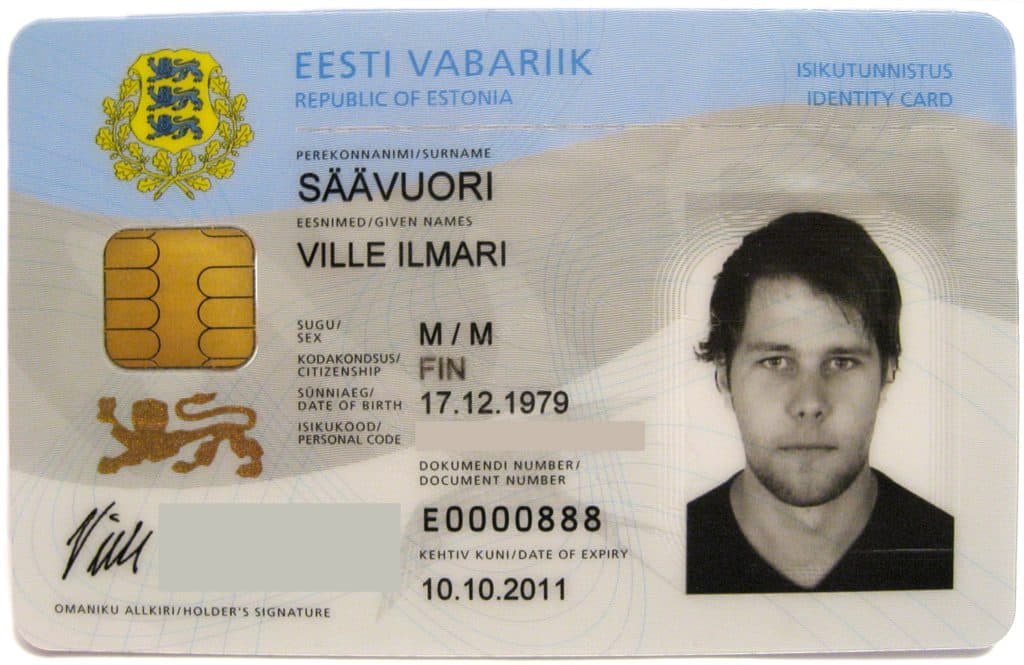
Eleven digits, and they are not random. The first digit encodes century and sex, the next six your date of birth, then a serial number and a check digit. Anyone who knows the format can read your birth date and sex off your code, which is worth knowing before you paste it into things.
It is issued once and does not change. It is not the same as your residence permit card number, and it is not the same as the number on your e-Residency card.
That it encodes your birth date and sex has a practical consequence worth absorbing early, because Estonian life asks for the code constantly. A landlord's letting platform, a clinic's booking form and a courier's collection slip all take the same eleven digits, and every one of them is being handed two personal facts you were not asked to volunteer. Nothing here is secret, exactly — the code is an identifier rather than a password, and it is quoted openly in Estonian administrative life. But it is also the key registers are searched by, which is a different kind of exposure from a customer number.
The Code, the Card and the Digital Identity Are Three Things
Almost every confusion on this page comes from collapsing three separate objects into one. They are issued at different times, they can exist without each other, and only one of them is permanent.
| What it is | Lifespan | |
|---|---|---|
| The isikukood | A number. The identifier every Estonian register is keyed to | Permanent — issued once, never changes |
| The ID card | A physical document that carries the code, plus its own separate document number | Expires and is replaced; the code inside it does not change |
| The digital identity | The means of proving you are the person behind the code — ID-card, digi-ID, Mobile-ID or Smart-ID | Tied to the credential, not to you |
The distinction matters because Estonian e-services do not accept a code on its own. There is no username and password anywhere in the state estate: the health portal logs you in by eID only, and the Tax Board's e-service accepts an ID-card, Mobile-ID, Smart-ID or an EU electronic identity. Knowing your own eleven digits authenticates you to nothing. It is the credential that does the work, and the code is what the credential resolves to.
An e-Residency digi-ID is a digital identity with a code attached, and nothing else. The programme is explicit and worth quoting rather than paraphrasing: the card “does not serve as a residency permit”, e-Residency “does not grant you the right of entry to or residency in Estonia”, and it “is not a valid form of physical identification and cannot be used as a travel document”. So an e-resident holds the third column of that table and none of the rest of the country that a resident’s code opens.
A code recorded wrongly. Because the first seven digits are your birth date and sex, a transcription error at the moment your basis was granted is visible in the number itself. No correction procedure is published by any authority. Take it back to the authority that granted the basis your code came from and ask for the register entry to be corrected — and do it before the code is written into a lease, a payroll record and a health file.
The Documents That Carry It, and What Each Costs
The code itself is free, and it is the only free thing in this section. What costs money is the document that proves you are the person the code belongs to, and there are three of them in circulation. Which one you end up holding is decided by your citizenship rather than by your preference, and two of the three are routinely mistaken for the third.
| Document | Who holds it | In an office | Self-service | Validity |
|---|---|---|---|---|
| ID card | Anyone with an Estonian personal code and a legal basis to be here | €45 — €75 at a foreign representation | €35 | Expires and is replaced; the code inside does not change |
| Alien’s passport | A foreigner with an Estonian permit or right of residence who holds no travel document from any other state and cannot obtain one | €60 | €50 | Up to 10 years |
| e-Residency digi-ID | A non-resident. It carries a different code and no residency at all | €150 | — | 5 years |
The ID card is the ordinary case. Expedited issue costs €250, which is the largest single fee anywhere in this area and is worth avoiding by applying before the old card expires rather than after.
The alien's passport is not a lesser ID card. In the Police and Border Guard Board's own words it is "a travel document issued by the Republic of Estonia to certain foreigners", and it goes to someone who holds a valid Estonian residence permit or right of residence and can show they have no travel document from their home state and cannot get one. Fingerprints are taken from age 12. The reduced fee — €25, or €20 through self-service — applies to anyone under 18, anyone who has reached retirement age, and anyone with a moderate to profound disability. Expedited issue is €250. The undetermined citizenship page covers who its holders are and why there are still tens of thousands of them.
The e-Residency digi-ID belongs in a different column of the table above — it is a digital identity and nothing else. It costs €150 in 2026 and rises to a flat €165 on 1 January 2027; a forgotten PIN costs €20 to replace. The timings are the part people underestimate: the Board's review is 30 days, the card is then manufactured and shipped in 2–5 weeks, and the programme's own estimate of when most people actually hold one is 2 to 4 months after applying, because that includes getting yourself to one of the 50+ pickup points. Quoting the 30 days alone, as most guides do, tells someone they will have a card in a month. They will not.
Two document windows that fail applications quietly. An e-Residency application needs a passport with at least 2 months left on it and a photograph taken within the last 6 months. Neither is checked by the form as you fill it in, and both are the sort of thing that turns a 30-day review into a second application. The card activates automatically within 24 hours of collection.
How You Get One
You do not apply for an isikukood on its own. It falls out of something else.
Get a legal basis to be here
A residence permit, a right of residence as an EU citizen, or in some cases registering an address. The isikukood is assigned as part of that process.Register your place of residence
In the Population Register, at your local municipality. This is what makes you a resident on paper, and it is a precondition for long-term residence and naturalisation later.Get an ID card
The physical card carrying the code. An adult ID card costs €45 at a service office, €35 through self-service, or €75 at a foreign representation. Expedited issue is €250.
Getting One Without a Residence Permit
“You need a residence permit” is the short answer and it is wrong for a large minority of arrivals. What you need is a legal basis to be here, and a permit is only one of the shapes that takes.
| Who you are | What produces the code | The deadline attached to it |
|---|---|---|
| EU, EEA or Swiss citizen | No permit at all — a right of residence | Register your address with the municipality within 3 months of arriving, then apply for an ID card |
| Non-EU, arriving to live here | A residence permit | The code is assigned as part of the permit process |
| Non-EU student | A study residence permit | One month after the permit is granted to register your place of residence |
| Short-term worker | Nothing, on its own | The employer registers the employment; the worker has no filing to do — and no code follows from it |
| e-resident | A separate code, not this one | No residency, no register entry, no deadline |
An EU right of residence is not self-maintaining
The right of residence runs five years and extends automatically for five at a time — but it is revoked automatically if you do not hold a valid registered place of residence. Register within three months of arriving, apply for the ID card within a month of getting the status, and re-register every time you move. It is a two-minute formality that silently ends your legal residence if you skip it.
The short-term route is the one that strands people. Short-term employment registration is not a visa and not a residence permit: it is a registration the employer makes, and the worker files nothing at all. That is convenient right up to the moment you try to open an account, see a doctor or be paid normally, because none of it produced a personal identification code. Workers on that route routinely go without one, and only discover what it was for afterwards.
Registering Your Address, and Keeping It Registered
The code identifies you. The registered address is what attaches you to a municipality, and the two are separate steps that people collapse into one. You must register your residence in the Population Register within 14 days of moving in. It costs nothing.
What hangs off the register entry
More than people expect:
- Long-term resident status and naturalisation. A registered address is a condition of both — naturalisation names it in the Citizenship Act itself
- Free public transport in Tallinn, which is tied to registered residence rather than to being a student or a taxpayer
- School priority, and municipal services generally
- Your family doctor. A practice may refuse you on only two grounds, and one of them is that your Population Register address is outside its service area
- A voluntary Tervisekassa contract, which requires you to be registered as residing here
What it does not do
Two things people assume and should not:
- It does not make you tax resident. Registration is not one of the two residency tests — you can be registered and not tax resident, or tax resident and not registered
- It does not happen by itself when a permit is granted. The permit gives you the basis; registering the address is a separate act, with its own deadline
The five-year clock that never started. This is administrative and dull, which is exactly why it is skipped. A registered address in the Population Register is a condition of long-term resident status and of naturalisation, and it is what your health insurance and municipal services hang off. People put it off for a year and then discover the qualifying period they thought they were serving had not begun.
Your First Ninety Days, in Order
Every step on this page has a deadline attached to it, and the deadlines are set by different authorities who do not talk to each other about your calendar. Laid end to end they make a sequence, and the sequence has one property worth internalising before anything else: nearly every clock starts at a register entry rather than at an event you would notice.
The legal basis exists
A residence permit granted, a right of residence as an EU citizen, or in some cases an address registered. This is what produces the code — you never apply for it on its own.
Register your place of residence
In the Population Register, at your municipality, free. A study residence permit gives you 1 month from the grant instead; an EU citizen has three months from arriving, and then a month from getting the status to apply for the ID card.
Your employer enters you in the employment register
Not you — the employer. This is the entry the health insurance clock runs from, and it is the one step on this list you cannot perform or verify yourself.
Health insurance begins
Provided the contract runs longer than 1 month or is open-ended and social tax of at least €292.38 is paid for the month. Emergency care never depended on any of it.
Apply to a family doctor
You apply to the practice, not to the state, and they must answer in writing within 7 working days. You join the list from the first day of the following month but must be treated from the day you applied.
Form R, if your residency is genuinely unclear
The Tax Board recommends applying for a determination of residency by then, before you file a return for the first time. Being in the Population Register is not one of the two tests — see income tax.
The status the register entry was accruing towards
5 years of continuous temporary residence for long-term resident status, 8 for naturalisation. A registered address is a condition of both.
The three clocks that do not start when you think they do. The health insurance clock starts at the employment register entry, not at your first day at the desk. The family doctor obligation starts on the day you send the application, not the day you appear on the list. And the five-year clock for long-term status runs on registered residence, not on how long you have been physically here. Each of the three can be running while you believe it is not, or — worse — sitting still while you believe it is running.
The Employer's Side of It, Which Is Not Your Side
Two registers with similar names do different jobs, are kept by different authorities, and are filed by different people. Confusing them is why some arrivals believe their paperwork is done when it is not, and why others go looking for a form nobody expects them to file.
| Who files it | What it produces for you | What it starts | |
|---|---|---|---|
| The employment register | Your employer, before you start work | The basis your health insurance hangs on | The 14-day waiting period, and the 2-month run-off when it ends |
| Short-term employment registration | Your employer, with the Police and Border Guard Board | No personal identification code at all | Nothing that reaches you. The worker files nothing and receives nothing |
| The Population Register | You, within 14 days of moving in | The registered address every later status depends on | The qualifying period for long-term status and naturalisation |
The employer registers you before you start, not after. The two dates therefore usually coincide, and when they do not it is invisible: register you late and your cover simply starts late, with nothing failing and nobody writing to tell you. If you have arrived and been asked to begin work before any paperwork exists, that is the moment to ask, not the moment to be polite about it.
Short-term employment registration is the route that produces nothing for the worker. It is filed by the employer and covers work of more than 5 days in a month, up to 365 days within a rolling 455 days. The registration names a single employer: a new job needs the new employer to register afresh, and until that entry exists there is no right to work for them. None of it puts a code in your hands. The work permit page sets out the whole route.
Two employer-side rules worth knowing as an employee. Where the employment covered by a work-based residence permit changes, the Board has a 30-day review period — the job change is a supervised event rather than a private arrangement between you and a new employer. And the Unemployment Insurance Fund’s permission, which an employer needs before recruiting from abroad, is not needed again once you have worked here for 12 months on a residence permit. That single fact makes you materially cheaper to hire in your second year than in your first, and almost nobody repeats it.
What Does Not Work Without One
The blunt version — “nothing works without an isikukood” — is close enough to be useful and wrong in two specific places worth knowing, because both of them cost money or time when you get them wrong in either direction.
| Without a code | What actually decides it | |
|---|---|---|
| Your own health records | Closed | The portal has no username and password. Login is by eID only, so no code means no eID and no access |
| Registering with a family doctor | Blocked | The practice's service area is checked against your Population Register address |
| Collecting a prescription | Blocked | There is no paper. You collect by showing photo ID bearing your personal code — and someone else can collect for you if they know your code and show their own ID |
| Being in the employment register | Blocked | Which is also what starts the health insurance waiting period |
| Opening a bank account | Possible without one | Banks ask for a connection — a signed lease, an employment contract, an enrolment certificate. A code puts you on the ordinary side of the tariff rather than the non-resident one |
| A mobile phone contract | Not the obstacle | No operator's terms mention an isikukood requirement at all. What you meet is a credit check, and a demand for a deposit because you have no Estonian credit history |
Renting sits awkwardly between the two columns. Some letting platforms require an Estonian ID code for the contract and the background check — and a fresh code has no payment history behind it, so having one is not the same as passing the check. Expect to be asked for an employment contract and bank statements instead, which is the same evidence a bank wants.
The pattern across all of it is consistent. The code is not a permission; it is the key the registers are indexed by. Where a service reads a register — health, employment, municipal, tax — the code is load-bearing. Where a private business is making its own commercial judgement about you, it is not, and the thing you actually lack is a documented history in Estonia.
What the Code Is Worth at a Bank, in Euros
"You need an isikukood to open a bank account" is the commonest thing said about the code and it is not true. What a bank actually asks for is a connection to Estonia, and a signed lease, an employment contract, a certificate of enrolment or a documented link to an Estonian company all satisfy it. What the code changes is the price, and the price is published, so this is one of the few places on this page where the difference can be stated in money rather than in inconvenience.
| Bank | To open | Monthly | The category that decides it |
|---|---|---|---|
| LHV | €100 for the EEA and Switzerland, €200 elsewhere | €10 / €20 | Non-resident, split at the EEA border |
| SEB | — | €0.30 resident, €0.30 for an EEA non-resident, €7 outside it | The EEA border, not residency |
| Swedbank | €250 for a non-resident, up from €200 on 31 August 2026 | — | Free opening for the EU, EEA, the UK and Switzerland |
| Coop Pank | €195 outside the EEA | €8 | Non-EEA |
For an EU citizen the price cliff is at the EEA border, not at the code. SEB charges an EEA non-resident the same €0.30 a month as an Estonian resident. So an EU citizen who has not yet got a code is not paying a penalty at SEB at all, while the same person at LHV pays €100 to open and €10 a month. Read the two lines together and the practical advice inverts: for an EU or EEA citizen, waiting for the code to avoid a non-resident tariff can cost more than choosing a different bank would have saved. Outside the EEA the picture is the ordinary one — SEB charges €7 a month and a €250 document-handling fee to a private person, and Coop €195 to open.
Two things are the same whichever side of that line you are on. A decision takes up to 10 business days — SEB publishes this as its own deadline — so an account is not a same-day errand. And deposits are protected to €100,000 per depositor per bank, paid out within 7 working days, which is a property of the bank's licence rather than of your status. The bank accounts page compares the tariffs in full.
The Estonian History You Do Not Have Yet
The second half of the pattern above deserves its own section, because it is what people are actually meeting when they blame the missing code. A fresh isikukood is eleven digits with nothing behind them. Every private check that looks you up finds an empty record, and an empty record is not the same as a good one.
Where the code is genuinely load-bearing
Anything that reads a state register: your health records, the employment register, a family doctor’s service area, a municipal service, the tax e-service. Here the code is the key the register is indexed by, and without it the query cannot be run at all.
Where the code helps but is not the obstacle
Banking. A connection to Estonia opens the account; the code moves you off the non-resident tariff. Letting platforms sit here too — some require the code for the contract and the background check, and then run a check that a new code cannot pass.
Where it is beside the point entirely
A mobile contract. No operator’s terms mention an isikukood requirement at all. What you meet is a credit check and a request for a deposit, and a deposit is what a business asks for when it cannot price the risk — the code would not have helped.
Estonia's payment-default register is run by a private company, on its own policy rather than by statute. The thresholds are published and they are low: a debt is registrable from €30 once it is 45 days late. A settled default stays visible for 5 years; an unsettled one for 15. That asymmetry is the point worth carrying away from this page: the first year in Estonia is when your record is being written, and a €30 dispute with a utility settles quickly and follows you for 5 years anyway.
One thing in Estonia asks for no code, no passport and no address. A prepaid SIM. Estonia still allows anonymous prepaid connections, which is unusual in Europe and is a live policy target rather than a settled arrangement — the Ministry of the Interior proposed banning them in 2023 and again around 2020, and neither proposal became law. Starter packs run from about €0.95 to €5, credit is valid for 180 days, and one operator closes the number after 210 days without a top-up. If you land with no code, no lease and no Estonian history, that is the one piece of infrastructure available to you on day one. Read the date on this paragraph before relying on it.
What the Register Entry Is Quietly Accruing
The address registration on this page costs nothing and takes minutes, which is exactly why it is left undone. What it is actually doing is starting a count that two much larger statuses are measured against years later — and neither of them can be backdated when you discover the count never began.
| Status | Residence it asks for | Estonian | State fee |
|---|---|---|---|
| Long-term resident | 5 years of continuous temporary residence immediately preceding | B1 | €185 — €93 for a child under 15 or a pensioner |
| Residence permit for a permanent resident | 3 of the last 5 years here | A2 | A different permit with a similar name — see the residence permit page |
| Naturalisation | 8 years, at least 5 on a permanent basis, holding long-term status when you apply | B1 | €150 |
All three want a registered address in the Population Register, and for naturalisation the Citizenship Act names it in terms. Long-term resident status additionally wants health insurance with Tervisekassa and stable income — so the 14-day waiting period and the 2-month run-off in the section above are not only about seeing a doctor. They are about whether the insurance condition is satisfied on the day you apply, years later.
Naturalisation also carries two exams. The Constitution and Citizenship Act exam is 24 multiple-choice questions in Estonian in 45 minutes, pass mark 18 correct, with the result issued immediately; registration closes 15 days before the sitting. The language exam is at B1, waived for anyone educated in Estonian, and it is getting harder rather than easier: the B1 pass rate among people who sat it fell from 62.93% in 2024 to 59.57% in 2025.
The address is the cheap step that the expensive ones are measured from. Registration costs nothing and has a 14-day deadline that nobody enforces on the day. Long-term resident status costs €185, naturalisation €150 and a language exam most candidates fail, and both are counted in years of registered residence. The order in which people usually discover this is the wrong way round — they meet the 14 days as a formality on arrival and the 5 years as a disappointment much later.
e-Residents Get a Different Number
This causes real confusion. e-Residency also issues you a code, and it looks like an isikukood. It is not the same thing in the way that matters.
An e-resident's code identifies you inside Estonian e-services so you can sign documents and run a company. It does not make you resident, it does not register you in the Population Register as living here, and it does not entitle you to health insurance or any other service that depends on residency. The programme is explicit that e-Residency confers no physical residency and no right of entry.
If you later move to Estonia properly, you go through the residence process like anyone else.
Common Mistakes
The first mistake is treating the e-Residency code as an isikukood. It works inside e-services and nowhere else: it puts nobody in the Population Register, and it entitles you to no service that depends on residency. The second is assuming the permit registers your address. It does not — registration is a separate act with its own deadline, 14 days from moving in, or a month from a study permit being granted. And an EU citizen who lets the address registration lapse loses more than a formality: the right of residence is revoked automatically without a valid registered place of residence, so re-register every time you move.
Several mistakes are about waiting for the code when you do not have to. Banks ask for a connection to Estonia rather than for the code, and a signed lease, an employment contract or a certificate of enrolment is what moves you off the non-resident tariff. No operator's terms require the code for a phone contract either; what you meet is a credit check and a request for a deposit, because there is no Estonian credit history to look up. Nor is the non-resident tariff always worth avoiding: SEB charges an EEA non-resident €0.30 a month, the same as a resident, so for an EU citizen the choice of bank matters more than the wait. The family doctor is the one case where waiting is fair enough, since the practice checks its service area against your Population Register address — but apply the day the code exists rather than the day you feel settled, because they must treat you from the day the application arrives rather than from the day you appear on the list.
Three more are about things that fail quietly. Reading registration as tax residency is one: it is not one of the two tests, and you can be registered and not tax resident, or tax resident and never registered — see income tax. Assuming your employer has registered you is another. The employment register entry is what starts the 14-day health insurance clock, and it is the one step you cannot perform or verify yourself; registered late means covered late, with nothing failing visibly. And letting a small unpaid bill sit through the first year has a long tail: a debt is registrable from €30 once it is 45 days late, and a settled default is still visible for 5 years — year one is when the record you will be judged on is written.
Finally, the e-Residency review time is not the waiting time. 30 days is the review; the card then takes 2–5 weeks to make and ship, and most people collect 2 to 4 months after applying.
Immigration cases go wrong in expensive, slow ways. Get matched with an English-speaking immigration specialist in Estonia.
Frequently Asked Questions
What is an isikukood?
The eleven-digit Estonian personal identification code. It identifies you across every state system — tax, healthcare, banking, the Population Register — and is assigned when you gain a legal basis to reside here.
Can I get one without a residence permit?
Yes, if your legal basis to be here takes another shape. An EU, EEA or Swiss citizen needs no permit at all — register your address with the municipality within three months of arriving, then apply for an Estonian ID card. A non-EU student gets the code through a study residence permit and then has one month to register their place of residence. A non-EU national arriving to live here otherwise needs the permit. The route that produces nothing is short-term employment registration, which the employer files and which leaves the worker with no personal code at all. e-Residency issues a separate code that does not confer residency.
Does e-Residency give me an isikukood?
It gives you a code for use in Estonian e-services, but not resident status. It does not register you in the Population Register as living in Estonia and does not entitle you to health insurance or municipal services.
What does an ID card cost?
For an adult, €45 at a service office, €35 via self-service, or €75 at a foreign representation. Expedited issue costs €250.
Does the code change if I change my name?
No. The isikukood is permanent and is issued once. The ID card that carries it expires and is replaced, and the card has its own separate document number, but the code inside it never changes.
How long do I have to register my address, and what depends on it?
You must register your residence in the Population Register within 14 days of moving in, and it costs nothing. A study residence permit gives you one month from the grant; an EU citizen registers with the municipality within three months of arriving. What hangs off it is larger than the formality suggests: a registered address is a condition of long-term resident status and of naturalisation, it decides free public transport in Tallinn and school priority, your family doctor's practice checks its service area against it, and a voluntary Tervisekassa contract requires it. For an EU citizen the right of residence is revoked automatically without a valid registered place of residence.
What is the difference between the isikukood, the ID card and Smart-ID?
Three separate things. The isikukood is a number — permanent, issued once, the identifier every Estonian register is keyed to. The ID card is a physical document that carries the code and has its own separate document number; it expires and is replaced. The digital identity — ID-card, digi-ID, Mobile-ID or Smart-ID — is the means of proving you are the person behind the code. Estonian e-services do not accept a code on its own: the health portal has no username and password at all, and the Tax Board's e-service authenticates by ID-card, Mobile-ID, Smart-ID or an EU electronic identity.
What does the employment register have to do with my personal code?
It is the register your health insurance hangs on, and your employer files it — before you start work, not after. Entry in it starts the 14-day waiting period after which cover begins, provided the contract runs longer than a month or is open-ended and social tax of at least €292.38 is paid for the month; cover then continues for 2 months after the termination is entered. Because the two dates usually coincide, a late entry is invisible until you need a doctor. Short-term employment registration is a different thing entirely: the employer files it with the Police and Border Guard Board, it covers work of more than 5 days in a month up to 365 days within a rolling 455, it names a single employer, and it produces no personal identification code for the worker at all.
Is there an Estonian document other than the ID card that carries the code?
Yes, two. The alien's passport is, in the Police and Border Guard Board's own words, a travel document issued by the Republic of Estonia to certain foreigners: it goes to someone holding a valid Estonian residence permit or right of residence who has no travel document from their home state and cannot obtain one. It is valid for up to 10 years and costs €60 at a service office or €50 through self-service, with a reduced €25 for anyone under 18, at retirement age, or with a moderate to profound disability, and €250 for expedited issue. The e-Residency digi-ID is the other, and it belongs in a different category: it carries a different code, confers no residency, and costs €150 in 2026, rising to a flat €165 on 1 January 2027.
How long does an e-Residency card actually take to arrive?
Longer than the number most guides quote. The Board's review is 30 days; the card is then manufactured and shipped in 2 to 5 weeks; and the programme's own estimate of when people actually hold one is 2 to 4 months after applying, because that includes getting yourself to one of the 50-plus pickup points. Two document windows fail applications quietly: the passport needs at least 2 months of validity left and the photograph must have been taken within the last 6 months. The card activates automatically within 24 hours of collection, and a forgotten PIN costs €20 to replace.
What is the registered address actually counting towards?
Two statuses that are measured in years of registered residence rather than in years of being here. Long-term resident status needs 5 years of continuous temporary residence immediately preceding, Estonian at B1, stable income, health insurance with Tervisekassa and a registered address, and the state fee is €185, or €93 for a child under 15 or a pensioner. Naturalisation needs 8 years, at least 5 of them on a permanent basis, and the Citizenship Act names the registered address in terms; the state fee is €150. There is a separate and easily confused permit for a permanent resident, which asks for 3 of the last 5 years and Estonian at only A2. The Constitution and Citizenship Act exam is 24 questions in 45 minutes with a pass mark of 18, and the B1 language exam is getting harder: the pass rate among those who sat it fell from 62.93% in 2024 to 59.57% in 2025.
Do I need an isikukood to open a bank account or get a phone contract?
Neither, strictly. Banks ask for a connection to Estonia rather than for the code — a signed lease, an employment contract, a certificate of enrolment or a documented connection to an Estonian company are all accepted — though holding a code puts you on the ordinary side of the pricing rather than the non-resident tariff. For mobile contracts no operator's terms mention an isikukood requirement at all; what you actually meet is a credit check and, commonly, a request for a deposit, because there is no Estonian credit history behind you. Letting platforms are the awkward case: some do require the code for the contract and background check, and a fresh code has no payment history behind it either.
Related Guides
The code follows the status, not the other way round
Nothing produces an isikukood on its own. A residence permit or a registered right of residence does, and the registered address is what every later clock is counted from. Start with the route that applies to you.